The Truth of Words
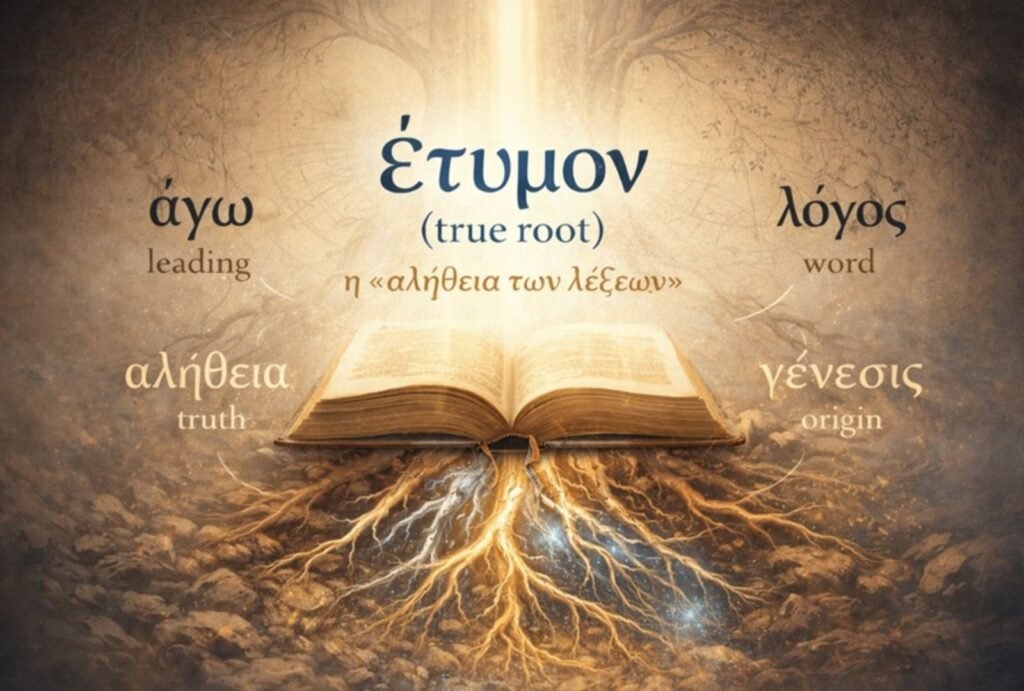
The Truth of Words / Η Αλήθεια των Λέξεων
[English] The word Etymon (from the Ancient Greek étymos, meaning “true”) signifies the original, authentic meaning of a word, its very root and origin. It is the heart of etymology—the “truth of words.”
An etymological dictionary is not a mere reference book. It is a map of memory.
Every word we use today holds its truth within it—sometimes visible, sometimes hidden. Etymology does not simply “explain” a word; it reveals it. It shows where it began, how it was transformed, and what it keeps alive through time. Through this path, language ceases to be a collection of random sounds and becomes a continuum of meaning. Words begin to connect, forming families and reminding us that nothing is born in isolation.
For the student—young or old—the etymological dictionary opens a new experience: They don’t just learn words; they learn to see them.
And then, something simple yet profound happens: Memory grows stronger, understanding deepens, and language becomes alive once more.
Words are not random. They remember.
THE GBD ETYMOLOGICAL NUGGETS: LETTER A (FULL LIST)
A
From a- (privative) + atis (blindness of mind). It means one who cannot be harmed or defeated. Note the sequence of tragedy: {Hubris (Arrogance) -> Atis (Mental Blindness) -> Nemesis (Divine Retribution) -> Tisis (Destruction/Punishment)}.
Derived from agkon (elbow).

