
- Discover the Greek Inside You
- Discover the Greek Inside You
- Welcome to HAVE FUN – the ultimate conceptual park for your intellect! If you ever thought learning Greek was about dry memorization, prepare to be wonderfully disrupted.
- The content before you is designed to spark a profound realization: You already speak Greek, you just haven’t realized it yet. Through a series of clever matching games and interactive challenges, you will unmask “Greek in Disguise” — modern Western words whose roots, bones, and soul are pure, ancient Greek. You will track down thematic “Intruders”, explore “Inseparable Word Pairs” that govern conceptual flow, and bridge the centuries by connecting Greek Roots to Latin and English Branches. Finally, you will get to structurally dissect words, decoding their true etymology and visually mapping their two core elements.
- Guidance: Do not approach this as a dry, academic test. Approach it as an initiation. Look closely at the sounds, trace the structural hints, and enjoy the magical “Aha!” moments when the camouflage falls away.
- Turn the page, become the observer, and unlock the universal code of thought. Enter and Have Fun!





Drag and drop
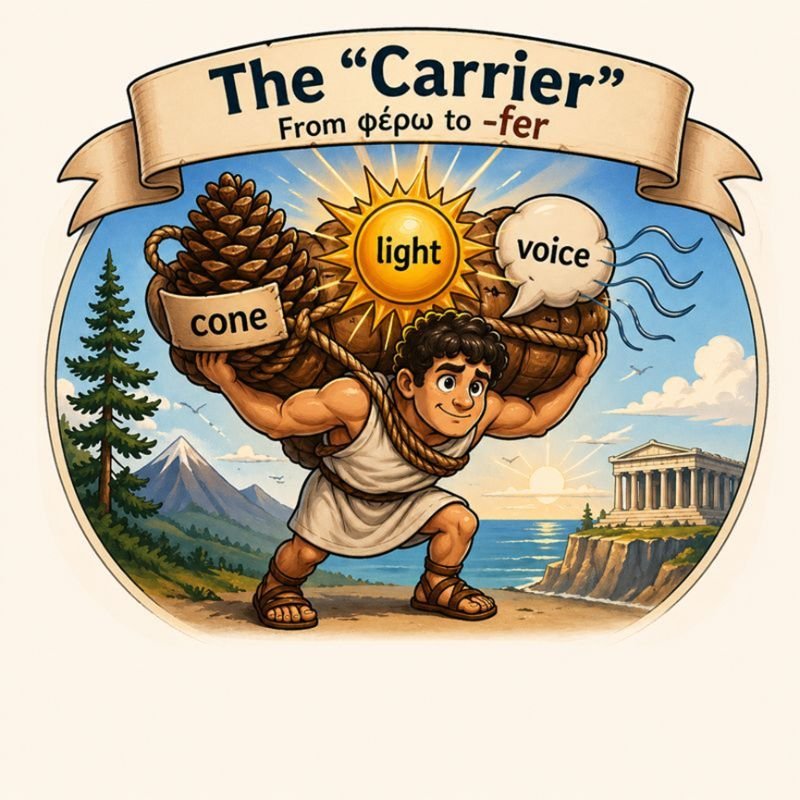
THE CARRIERS
Suffix: -fer / -φόρος
One Greek verb, φέρω (phero), traveled to English as -fer. Can you find the Greek roots hiding in these words?
Words to drag
KEY
- Κῶνος (Konos=Cone)
- Λύκη =φως (Lyki=Light)
- Fοσσα =φωνή (Vossa=voice)
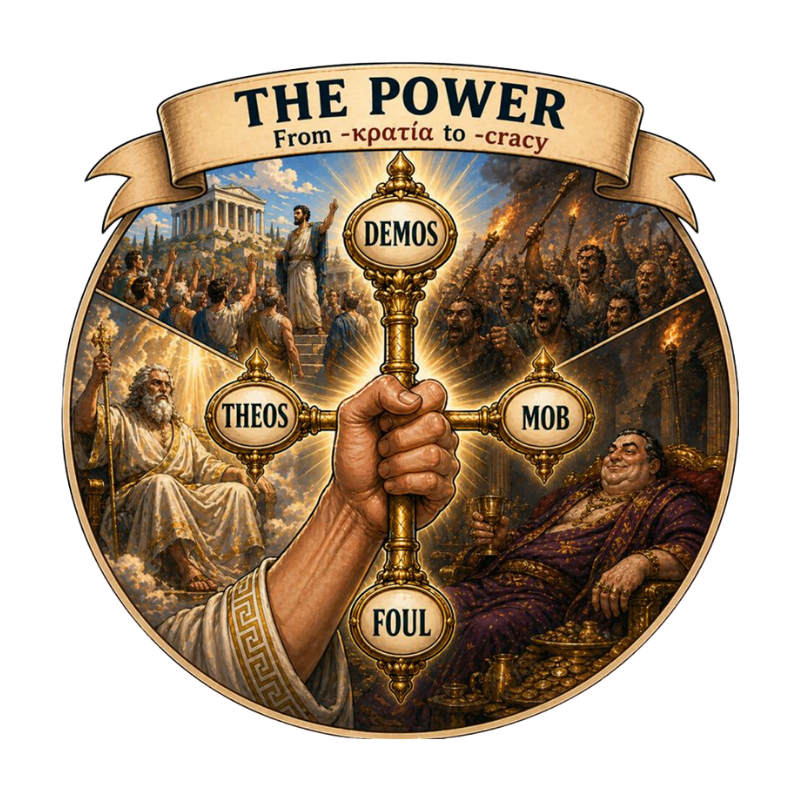
THE POWER
Suffix: -cracy / -κρατία
Who holds the power? Match the Greek “Boss” with the English System!
Choices
KEY
- Δήμος (Dimos=The people)
- Θεός (Theos=The God)
- Οχλος < μοχλεύω (Ochlos = The Mob)
- Φαύλος (Favlos=Foul/The Corrupt)
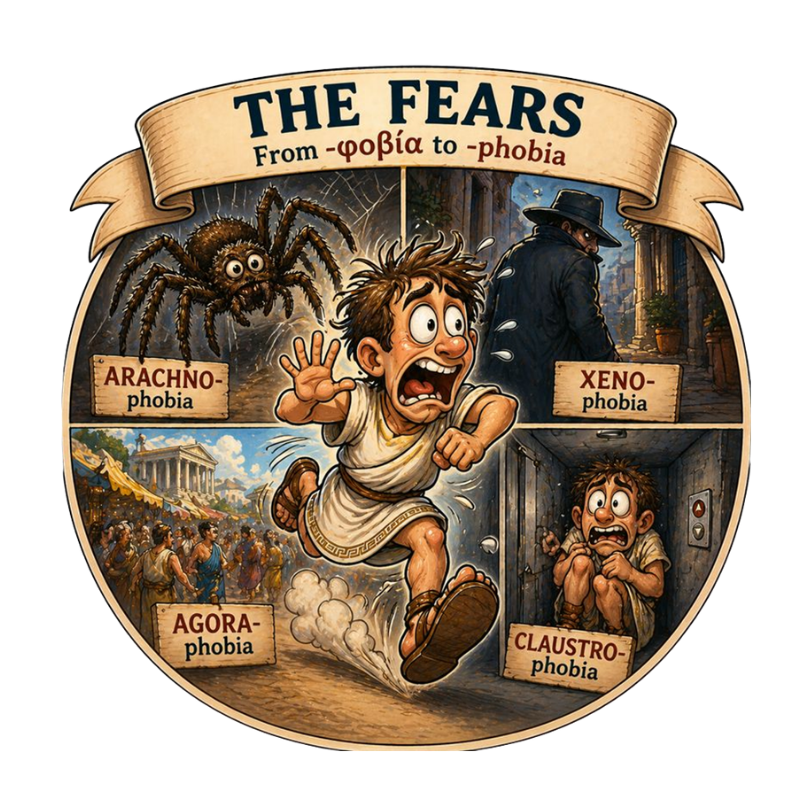
THE FEARS
Suffix: -phobia / -φοβία
Don’t be afraid! Identify the Greek root behind these famous phobias.
Choices
KEY
- Αράχνη (Arachni=Spider)
- Ξένος (Xenos= Stranger)
- Αγορά (Agora=Open spaces)
- Κλειστός (Klistos = Closed spaces)
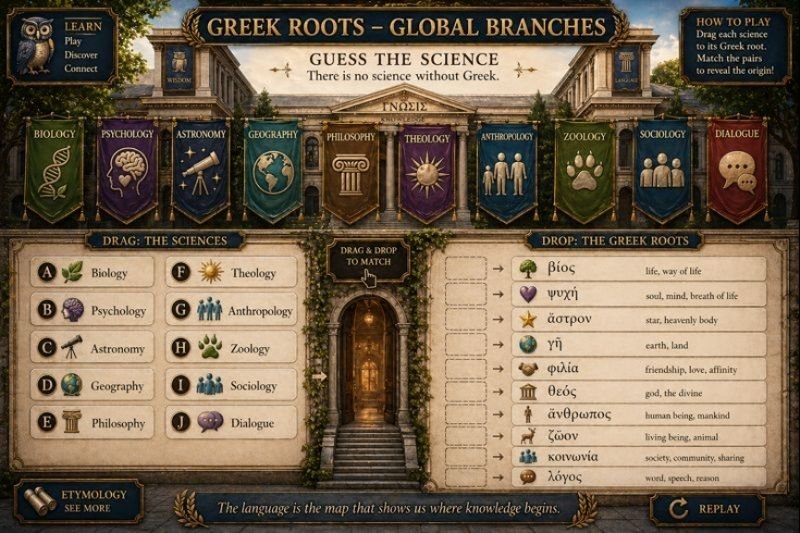
EXERCISE 1: «GUESS THE SCIENCE – LEVEL 1»
Match the Greek root of the first column with the respective science of the second column.
- Biology
- Psychology
- Theology
- Sociology
- Zoology
- Philology
- Anthropology
- Astronomy
- Geology
- Logology
Exercise 3: «THE SUFFIX -LOGY» (Intermediate)
Can you find the science?
LEVEL 2 — GREEK ROOTS ONLY
Exercise 4
Match the Greek root with the correct science.
LEVEL 3 — WRITE THE SCIENCE
Exercise 5
Write the correct science.
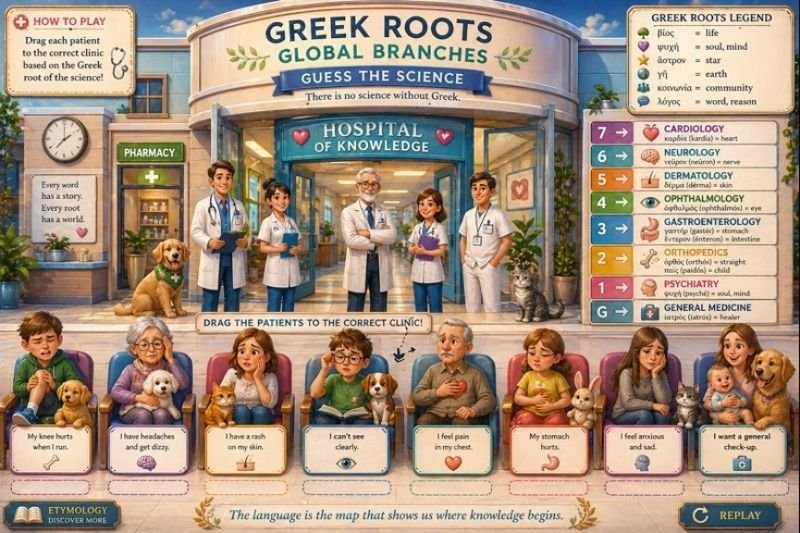
Exercise 2 The Matching Challenge: Find your Specialty
Match the ailment with the correct Greek-named clinic
(Specialty)
Glossary: The DNA of Medical Language
Did you know that these 8 clinics are named after Greek words?
- Cardiology (Καρδιολογία): From Kardia (heart) + Logos (study).
- Neurology (Νευρολογία): From Neuron (nerve) + Logos. The study of the nervous system.
- Dermatology (Δερματολογία): From Derma (skin) + Logos.
- Ophthalmology (Οφθαλμολογία): From Ophthalmos (eye) + Logos.
- Gastroenterology (Γαστρεντερολογία): A triple Greek word! Gaster (stomach) + Enteron (intestine) + Logos.
- Orthopedics (Ορθοπεδική): From Orthos (straight/correct) + Pais/Paideia (child/education, referring to correcting deformities).
- Psychiatry (Ψυχιατρική): From Psyche (soul/mind) + Iatreia (healing). The healing of the soul.
- General Medicine: From the Greek root med- (μέδομαι / μέδω). It means to care for, to protect, and to govern the health of the body. Even the famous Medici family of the Renaissance trace their medical roots back to the Greek "Iatros," (Doctor).
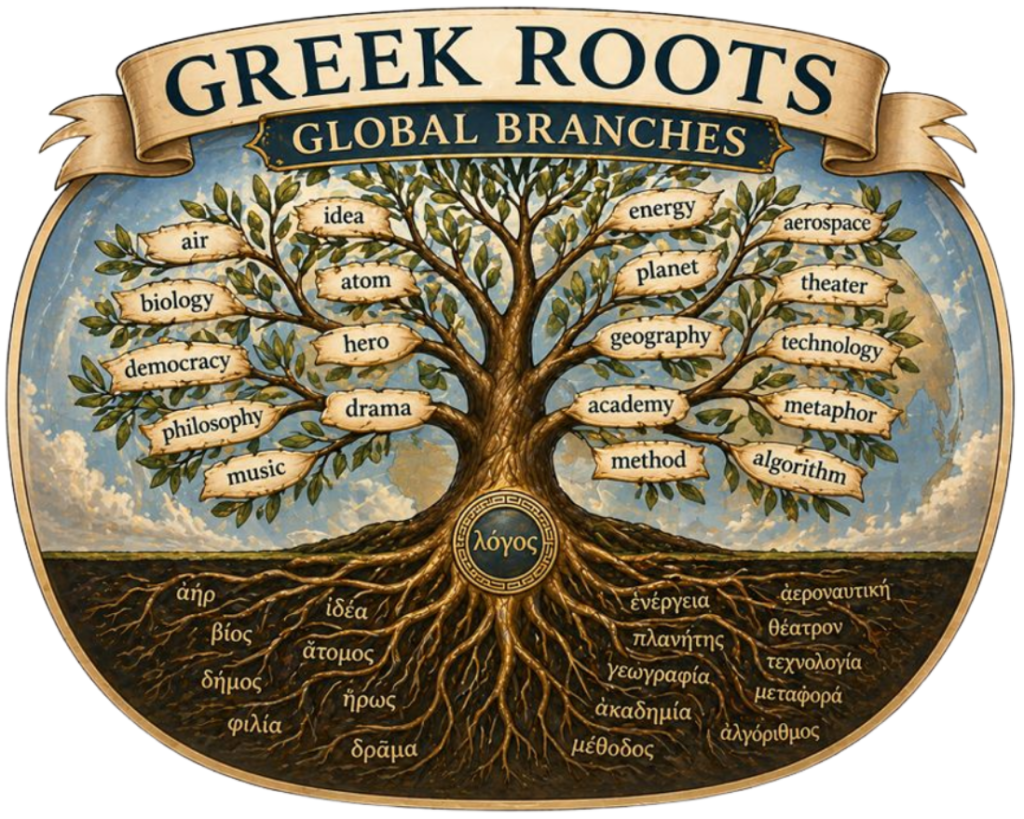
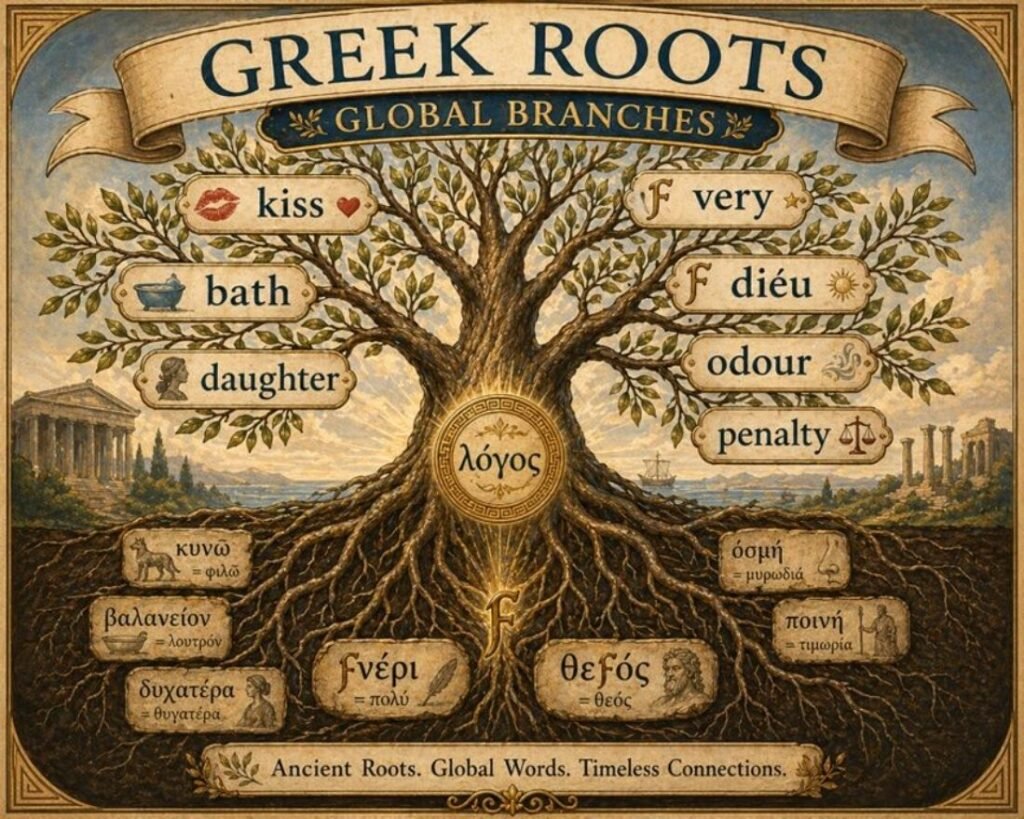
GREEK ROOTS GLOBAL BRANCHES
Read the two columns (Greek roots – modern words) and try to match each root with the correct modern term.
Take your time — look closely at the letters, the sounds, and the meaning.
Check the answers only after you have completed all matches.
Mini Lesson Guide
- Each set contains 5 target words and 5 Greek roots/etymologies.
- Goal: Match each English word with the Greek root it comes from — and explain why.
- First guess, then reveal: discovery is part of the learning joy.
- The Greek roots are authentic; the English words connect either directly or through Latin, which often acts as Greek… in disguise.
- Little secret: many words that look “foreign” are really Greek wearing a trench coat.
Sports centre
The etymology relay race
Scrambled Edition
“Run backwards through time… and discover what words really mean.”
Most people use words every day without ever asking: “What am I actually saying?”
In this relay race, you will travel from the modern English word back to its hidden Greek origins.
But be careful… Words rarely arrive unchanged.
Some lose letters.
Some change pronunciation.
Some wear disguises after centuries of travel.
Your mission is to rebuild the path.
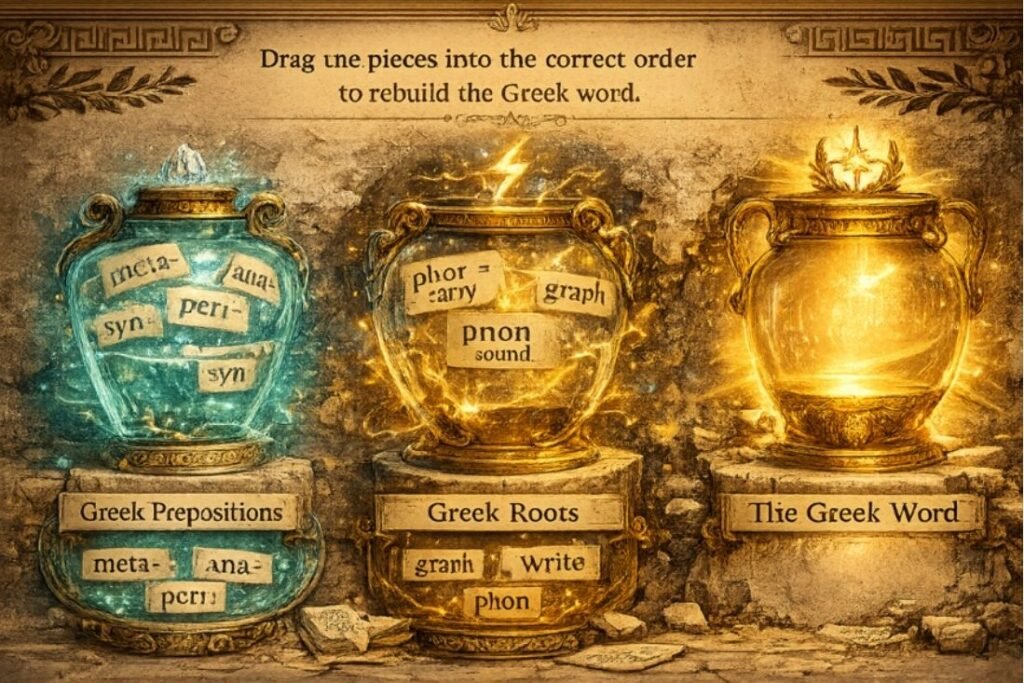
Reservoir 1
Greek Prepositions
Prefixes such as: meta-, ana-, peri-, syn-, etc.
These show:
- direction
- movement
- relation
- transformation
Reservoir 2
Greek Roots
These are the living core of the word:
- actions
- ideas
- forces
- concepts
Reservoir 3
The Greek Word
Now combine the elements and discover the original Greek word hidden inside the modern one.
The secret of the game
This is not just vocabulary.
As you rebuild each word, you will also uncover the true meaning of its components. You will begin to see that many words are not random sounds.
They are ideas assembled piece by piece. Like ancient machines of meaning.
✨ Example
METAPHOR
➡ metaphor = “to carry meaning beyond”
🏁 Ready?
Take the baton.
Follow the trail. And uncover the memory hidden inside words.
- Start from column 1, The Definition. Choose one definition to begin your route.
- Move to column 2 and click the English word that matches the definition.
- Then move to column 3 and choose the correct Greek preposition.
- Continue to column 4 and choose the correct Greek root.
- Finish in column 5 by clicking the complete Greek word.
- If your choice is correct, it will turn green and you can continue. If it is wrong, it will turn red and you should try another option in the same column.
- Complete one full route at a time. When you finish a route, press Reset to start a new one.
| 1. The Definition (START) |
2. The English Word | 3. Greek Preposition | 4. Greek Root | 5. The Greek Word (FINISH) |
|---|---|---|---|---|
THE STRIP CLUB (Delulu Fun Park)
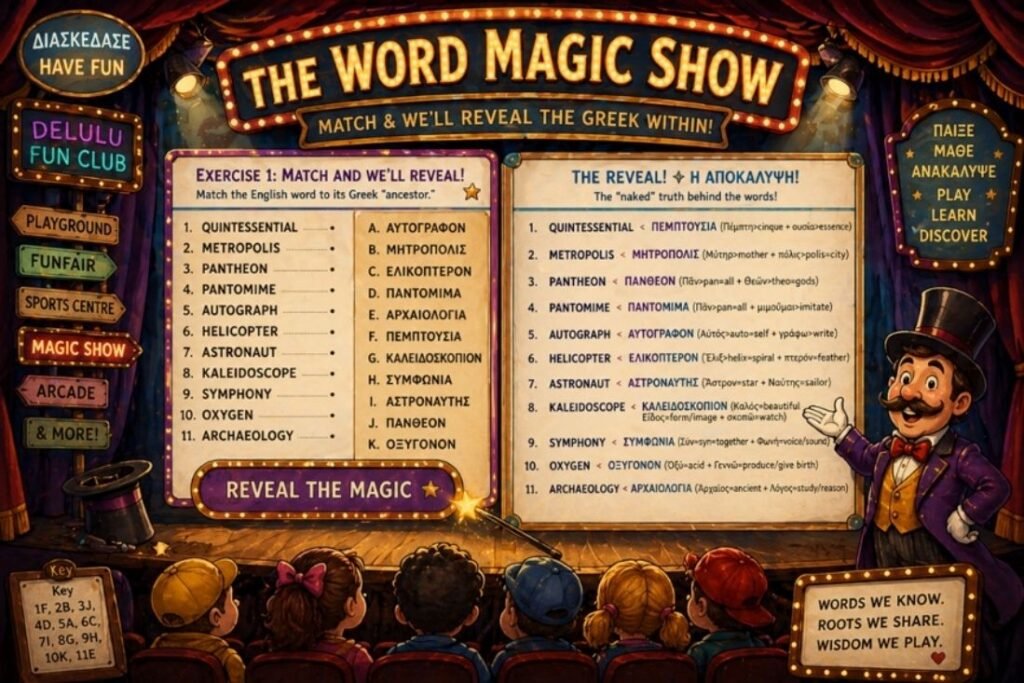
EXERCISE 1: MATCH AND WE’LL STRIP THE DISGUISE FOR YOU!
Match the English word to its Greek “ancestor.” When you’re ready, hit the button to see them naked
< ΠΕΜΠΤΟΥΣΙΑ <Πέμπτη>cinque +ουσία> Essence
< ΜΗΤΡΟΠΟΛΙΣ (Μήτηρ>mother + πόλις>polis=City.)
< ΠΑΝΘΕΟΝ (Πάν >pan=all + Θεὸν>theo=Gods.)
< ΠΑΝΤΟΜΙΜΑ (Παν>pan=all +μιμούμαι >imitate.
< ΑΥΤΟΓΡΑΦΟΝ (Αὐτός>auto=Self + γράφω>graph= write.)
< ΕΛΙΚΟΠΤΕΡΟΝ (Ἕλιξ >helix=spiral + πτερόν >feather π>f and τ>θ=th
< ΑΣΤΡΟΝΑΥΤΗΣ (Ἄστρον>star + Ναύτης>naut=Sailor.)
< ΚΑΛΕΙΔΟΣΚΟΠΙΟΝ (Καλός=beautiful] + Εἶδος= form/image] + σκοπῶ =watch.)
< ΣΥΜΦΩΝΙΑ (Σύν >syn=together + Φωνή >Voice/Sound)
< ΟΞΥΓΟΝΟΝ (Ὀξύ=acid+ Γεννώ>gen [To Produce/Give Birth])
< ΑΡΧΑΙΟΛΟΓΙΑ (Ἀρχαῖος=ancient>arch- + Λόγος>logos=study/reason.)
THE PIE GRAVE
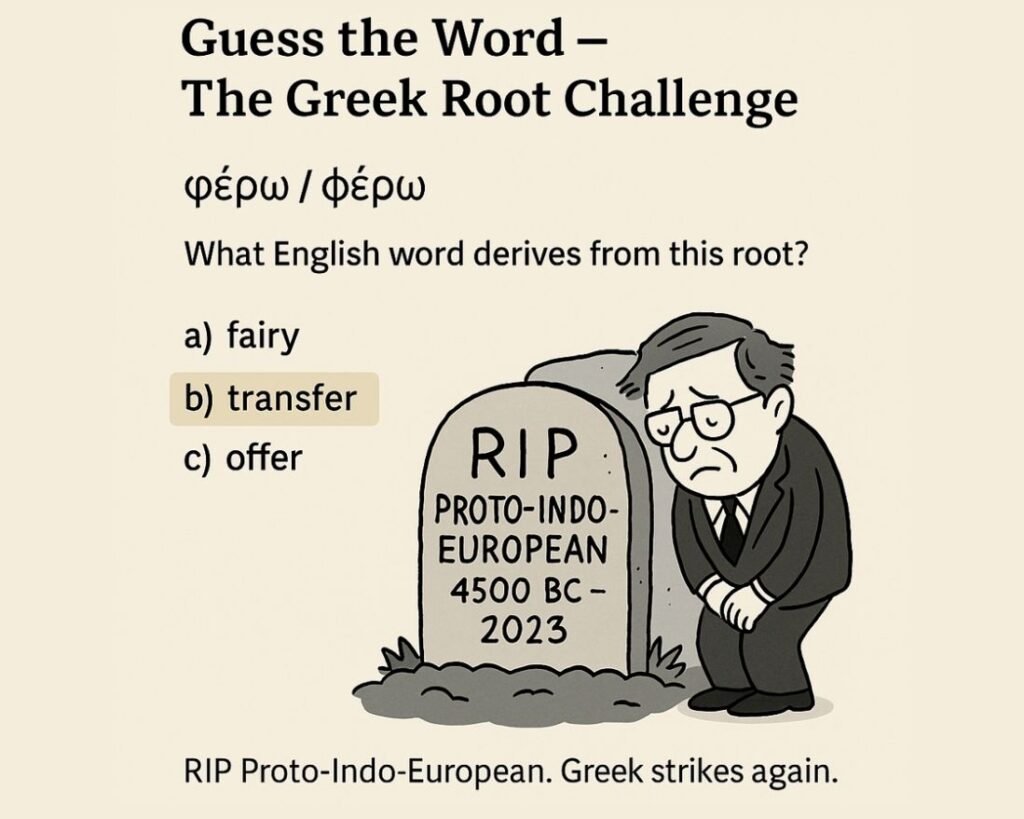
📜 Can You Rescue the Buried Root?
Welcome, Archaeologist.
A forgotten root lies buried beneath layers of interpretation.
Can you uncover it?
Your Greekness Score
THE GREEK SOUL OF OPERA
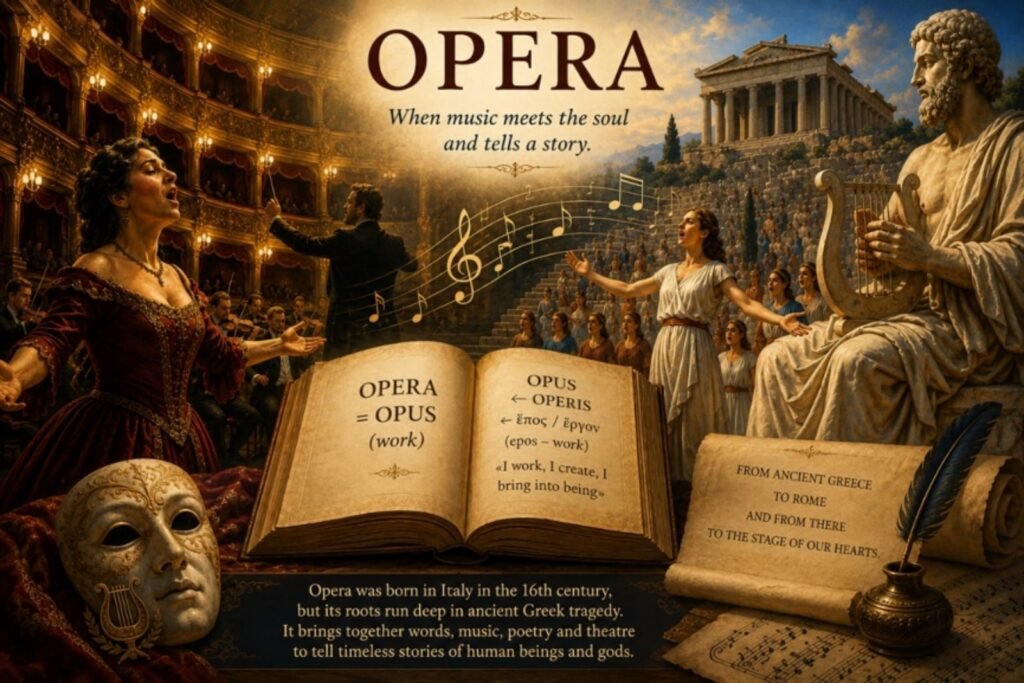
It is a secret well-kept within the grand theatres of the world, but Opera is, by birth and by theme, thoroughly Greek.
When the intellectual movement known as the Florentine Camerata invented Opera in Italy during the late 16th century, their goal was not to create a new musical genre. It was a passionate, romantic attempt to revive the ancient Greek Tragedy, which they knew was originally sung and accompanied by music.
This is why the themes of Opera are preeminently Greek: for centuries, composers drew their inspiration exclusively from Greek Mythology, the Gods of Olympus, and the Homeric Epics.
🌿 The Very First Opera: Daphne (1598)
It is no coincidence that the very first opera ever written in human history was titled Daphne (composed by Jacopo Peri, with a libretto by Ottavio Rinuccini). Played for the first time in Florence in 1598, this groundbreaking masterpiece brought to life the famous myth of the beautiful nymph who transformed into a laurel tree to escape the passion of God Apollo. The birth of Opera was practically a tribute to the sacred light of Delphi!
🏛️ The Etymology of OPERA
Even the word itself hides a brilliant Greek treasure.
- In Italian and Latin, Opera means “work,” “labor,” or “achievement.”
- However, this word travels directly back to the Ancient Greek «ὄφελος» (ophelos: benefit, assistance, or value produced by work) and the verb «ὀφέλλω» (ophello: to increase, to offer, to enrich).
Therefore, Opera is not just an entertainment format. Etymologically and historically, it is the ultimate spiritual work produced with great artistic labor, designed to enrich and elevate the human soul!
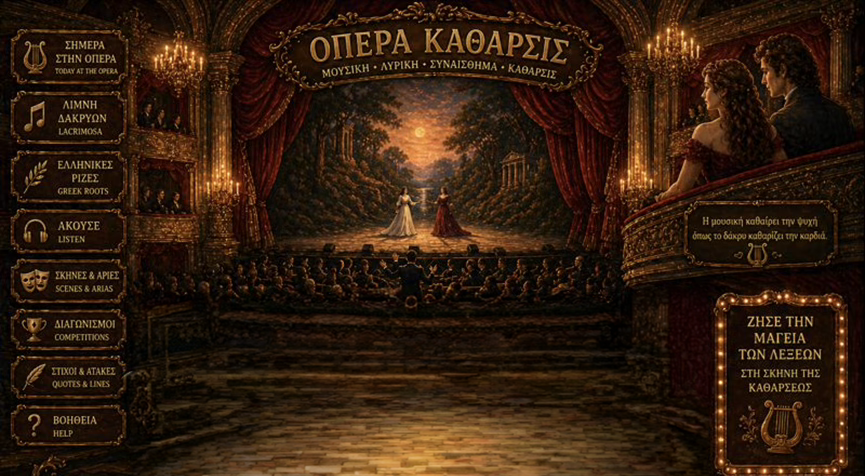
Opera Catharsis
Music · Lyric · Emotion · Catharsis
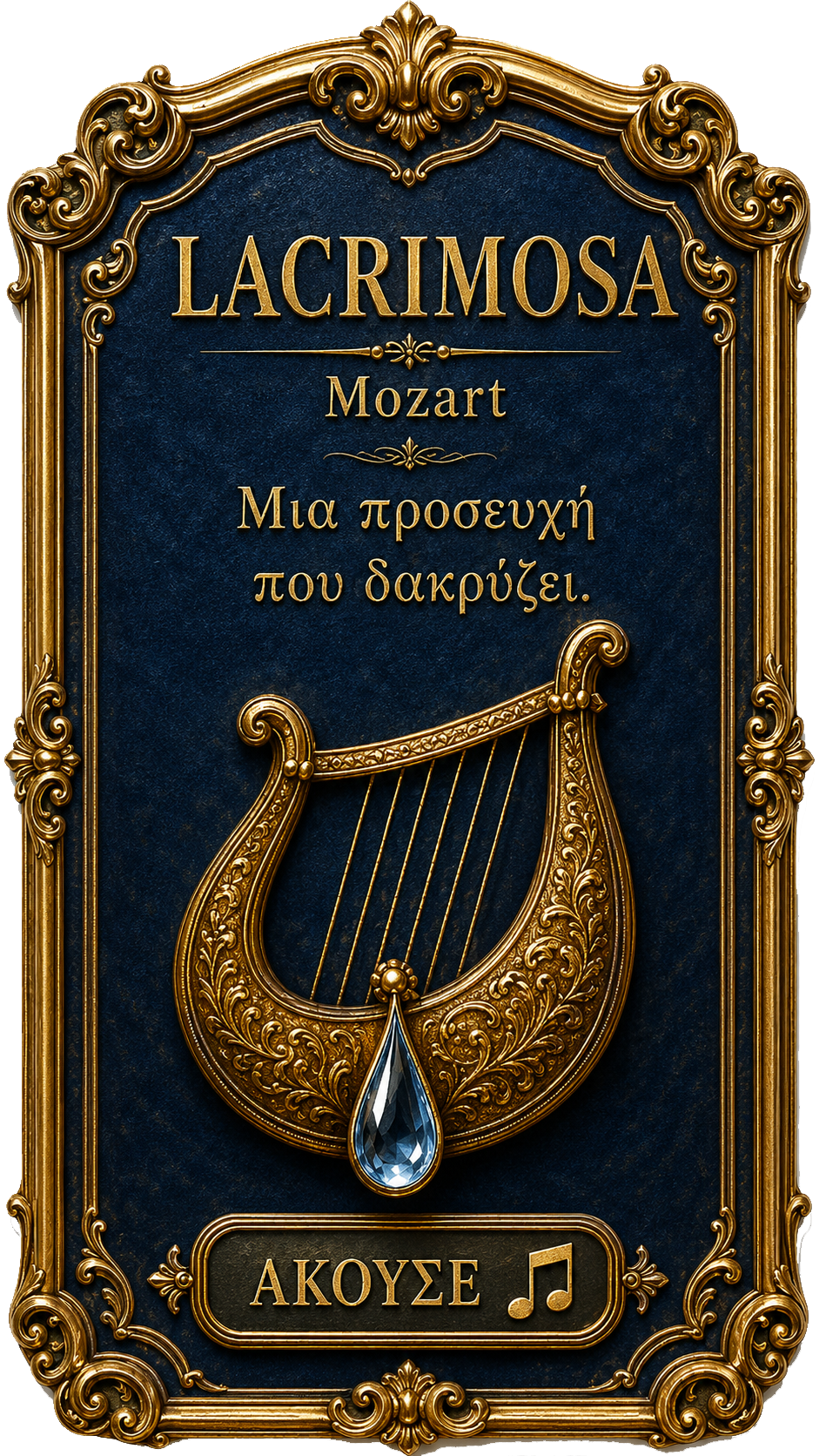
Lacrimosa
W. A. MozartA prayer that weeps.
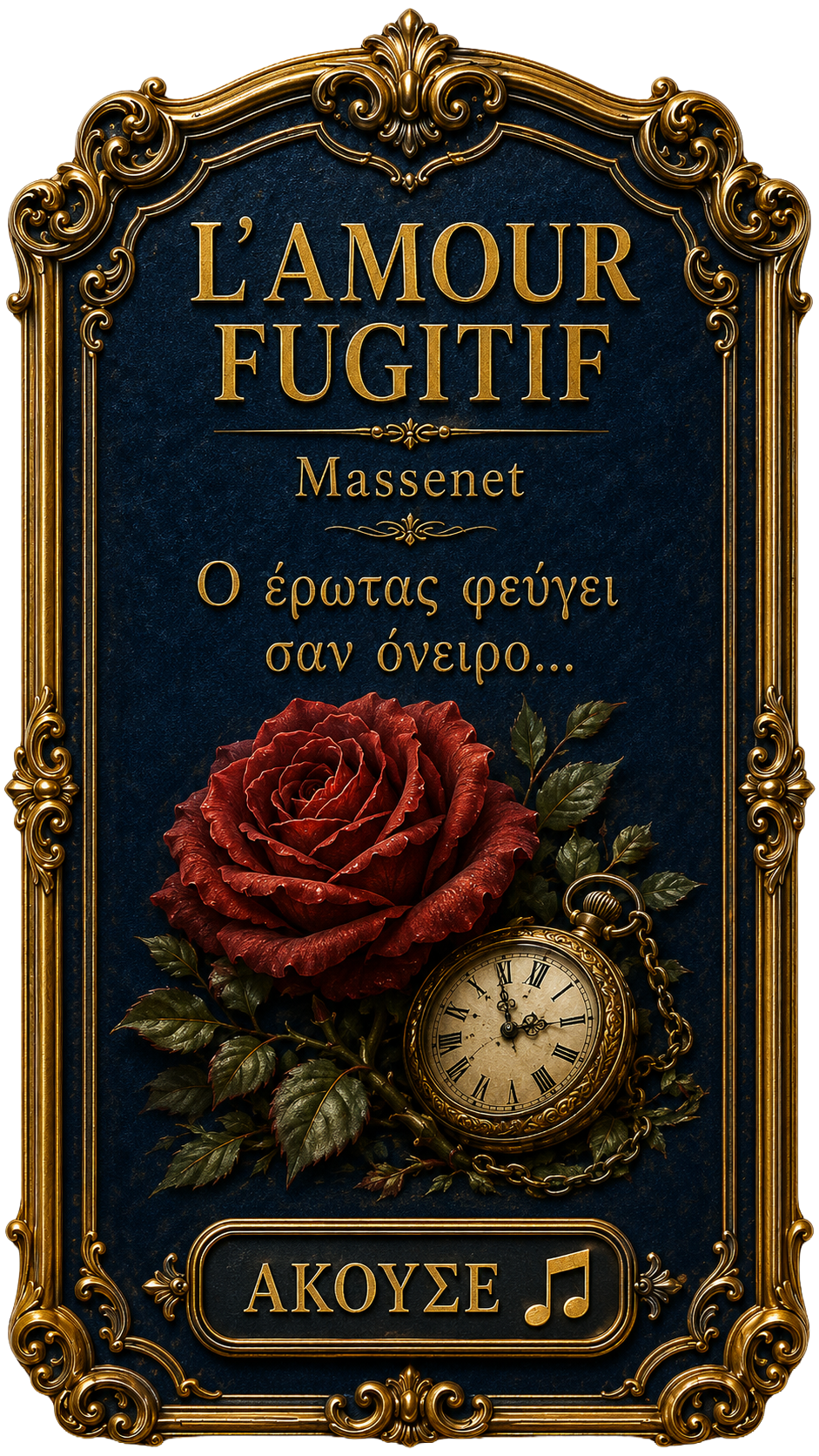
L’amour fugitif
J. MassenetLove vanishes like a dream.
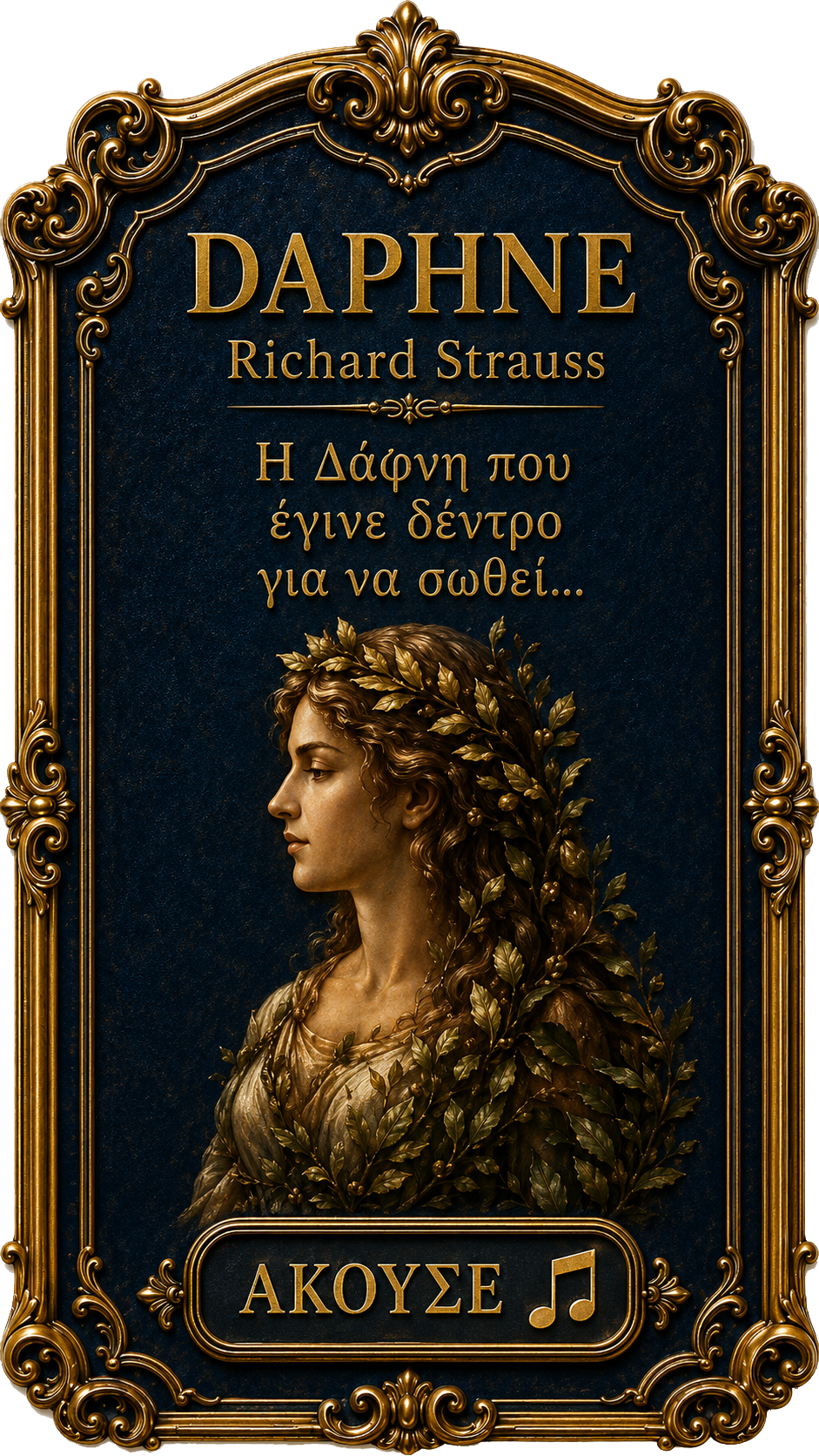
Daphne
R. StraussDaphne, transformed into a tree.
La Donna È Mobile
G. VerdiLove, instability, and the irony of an immortal aria.
Va, Pensiero
G. VerdiFly, thought, on golden wings.
Listen to the musical excerpt and discover how language, roots, and emotion meet inside the aria.
The Cosmic Slide Slam into the Root
Choose the Greek sled that carries the meaning. Watch it race through the galaxy and reveal the memory hidden inside the word.Διάλεξε το ελληνικό έλκηθρο που μεταφέρει την έννοια. Δες το να διασχίζει τον γαλαξία και να αποκαλύπτει τη μνήμη της λέξης.
Primordial gap or opening
Root Rider!
Words do not merely travel. They remember.
Οι λέξεις δεν ταξιδεύουν απλώς. Θυμούνται.
Φόρτωση παιχνιδιού… · Loading game…

