
Mythology Is Not a Fairy Tale · Cycle 1 · The Argos of Inachus
Mythology Is Not Fairy Tales
Season 1 · “Io — the girl who became a map” · Draft for the publisher's ink · greekablessingindisguise.com
Episode 1The Argos of Inachus
Before History became a book, it was a river.
And the river had a daughter.
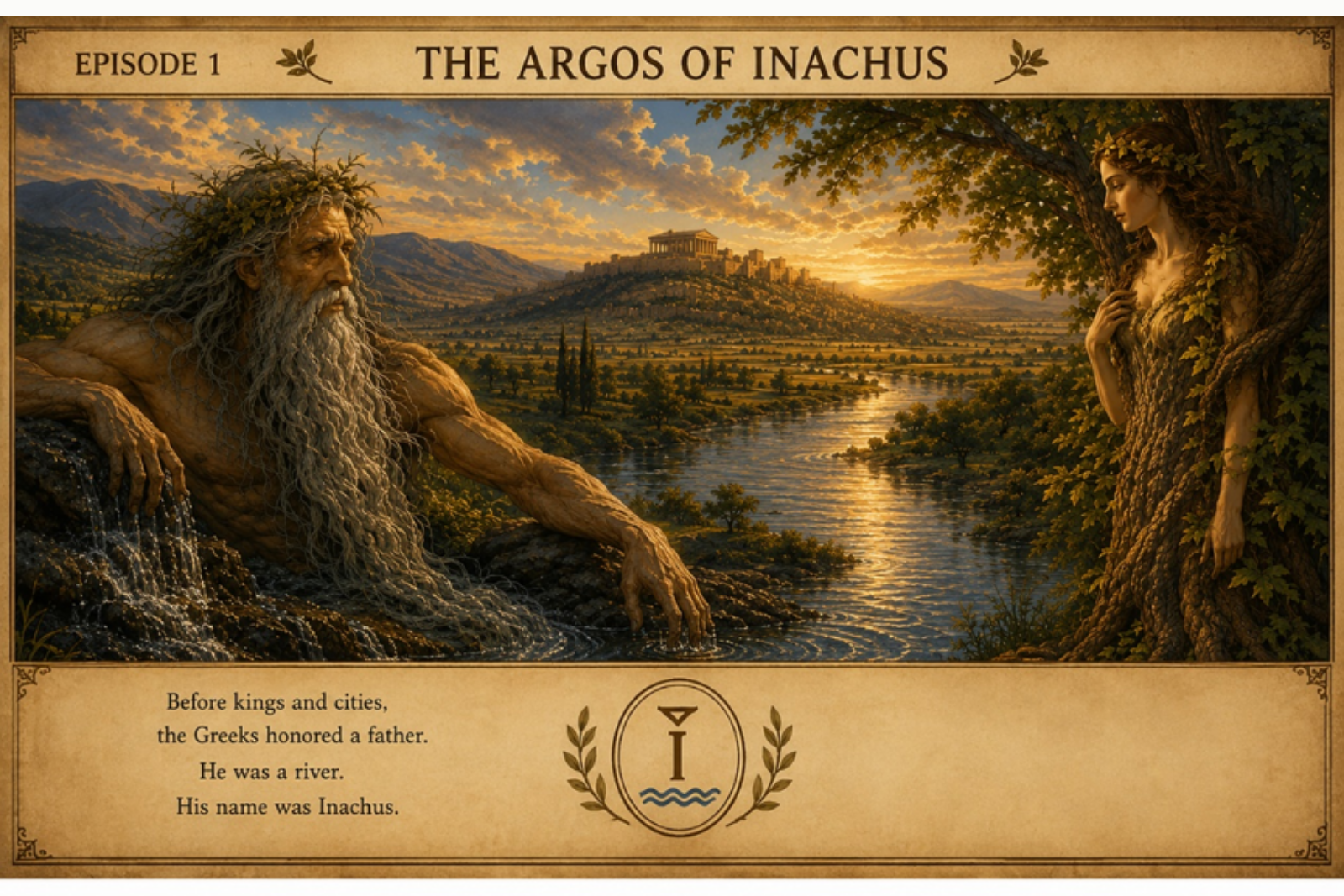
In the heart of the Peloponnese, where the plain of Argos opens toward the sea like a waiting palm, there runs a river the locals never called mere water. They called it father.
Inachus, the Argives said, was a son of Oceanus and Tethys — of that great world-stream that circles all the land and fathers every river on the planet. Homer knew him well: when he described the shield of Achilles, he set Oceanus at its outermost rim, embracing every image of human life.*1
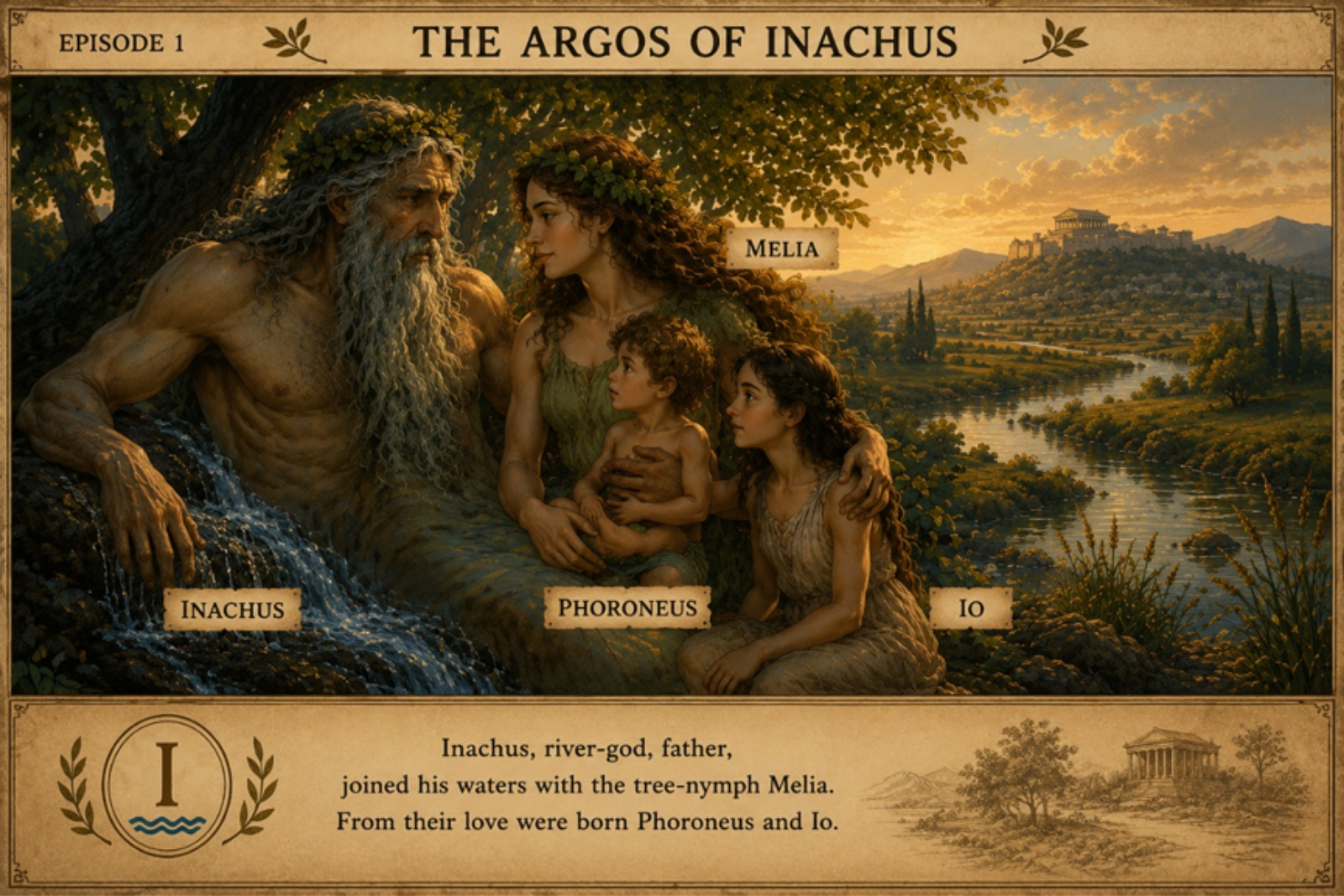
Inachus loved Melia, a nymph of the tree-folk — her name means the mountain ash, the spear-wood tree — herself born of the very first daughters of the sky.*2
A river and a tree; water and root. From such a marriage you do not get fairy tales. You get nations.
Scene 2
The First Fire
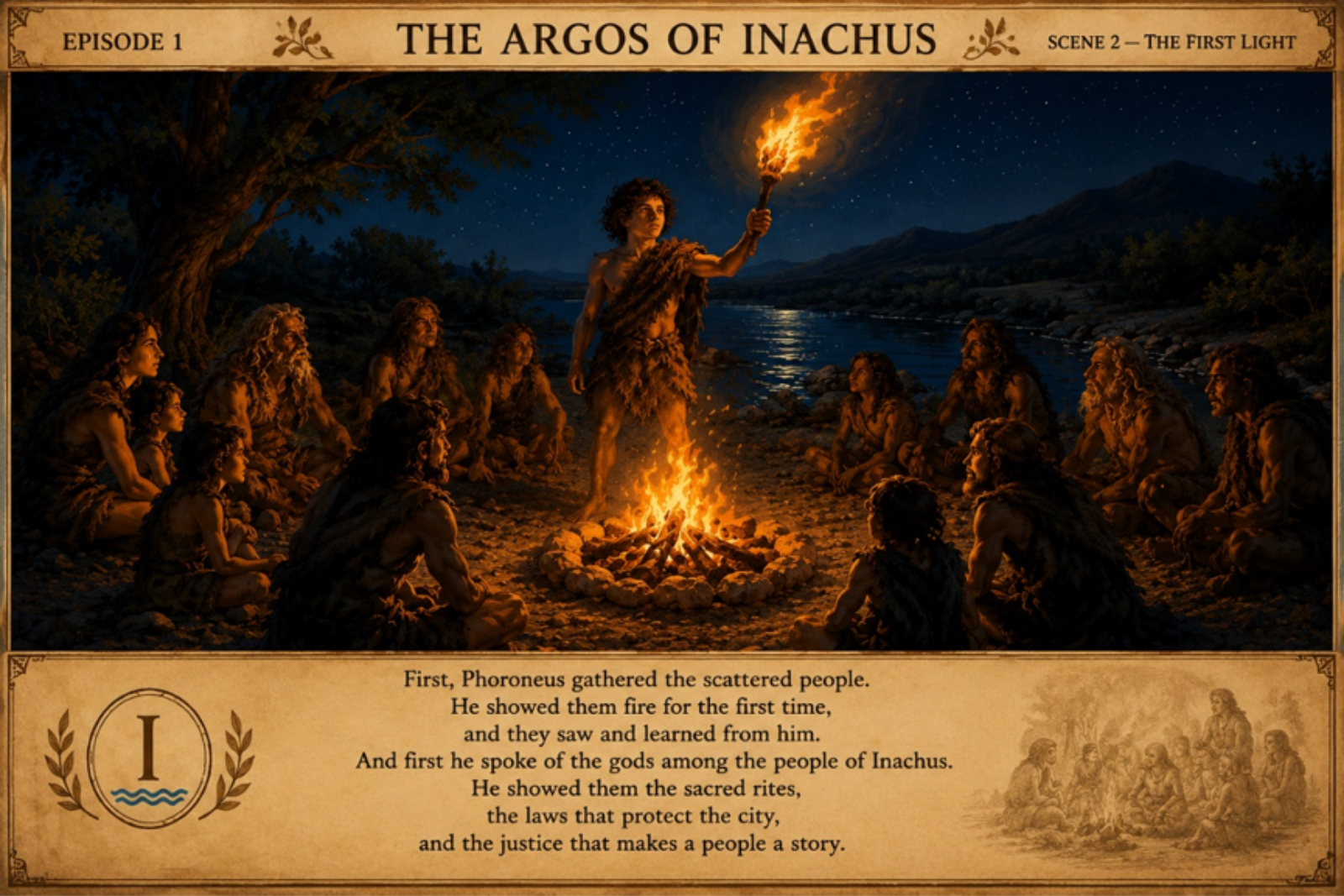
Their first child they named Phoroneus. And here the Argives said something that made the other Greeks raise an eyebrow: that Phoroneus was the first human being. Not Prometheus with his clay, not Deucalion with his stones — their own boy, the river's son.
Pausanias, who walked this ground centuries later asking questions, wrote it down with the smile of an honest reporter: that is what they say here.
And they said more: that Phoroneus first gathered the scattered people — who until then lived alone like wild things — and settled them together, in a place remembered as the “city of Phoroneus,” the first community.
And that he was the one who first gave fire to the people of the Peloponnese.*3
The moment prehistory takes a breath
and prepares to become history.
Scene 3
The Priestess
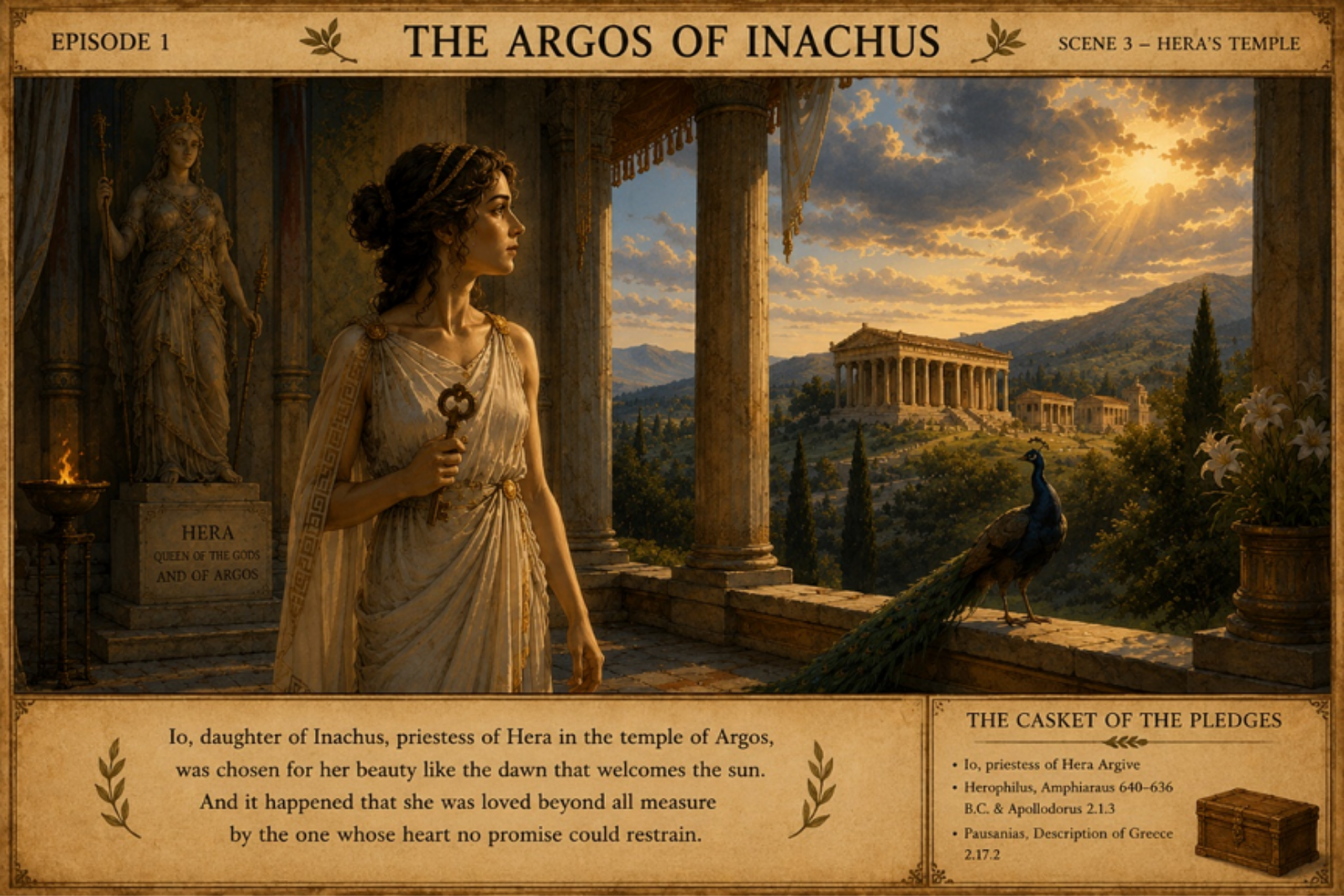
But Inachus also had a daughter. Her name was Io. And Io served at the great sanctuary of the land: she was a priestess of Hera, queen of the gods — the goddess of Argos itself, whose Heraion crowned the plain like a diadem.*4
A girl of the river, in the service of the most jealous goddess in the universe.
When fate intends to write a great story, it chooses the stage first, and carefully.
Because someone had noticed her. From very high up. Zeus — the husband of the very goddess Io served — began lowering his gaze toward Argos rather more often than the weather required.
And the girl, they said, began to dream: soft voices, night after night, calling her out to the meadows of Lerna where her father's herds grazed.
Inachus, father and river, grew uneasy — running water reads the clouds before anyone else does. He sent messengers to the oracles, to Delphi and to Dodona, to ask what the dreams wanted from his daughter.*5
And the answers that came back were the kind no father should ever have to hear.
But that is the next episode.
For now, hold the picture: a plain, a river who is a father, a first fire with humanity gathering around it — and a girl at Hera's temple who does not yet know that her name will be written across two seas, one strait between two continents, and the opening line of the first history book ever written.
Back to the beginning ↑
