
Quantum Nugget #20 — Time and Memory in Quantum Cosmology
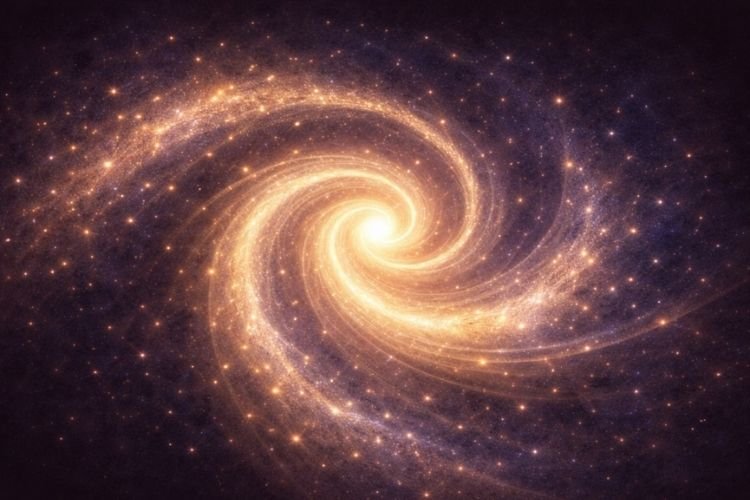
When the Universe Becomes Its Own Clock
Terms of the Day:
Quantum Cosmology — The Problem of Time
We look at a clock and imagine that time flows independently of us: an invisible river within which everything happens.
Modern physics, however, has taught us that time is not so simple.
In Einstein’s General Relativity, time is part of spacetime. It is not a fixed background: its geometry is affected by matter and energy.
In ordinary quantum mechanics, by contrast, time is usually treated as an external clock — a parameter according to which a quantum system evolves.
When we attempt to apply quantum theory to the entire Universe, these two conceptions come into conflict.
Who Keeps Time for the Entire Universe?
In a laboratory, we can observe a particle using a clock outside the experiment.
But there is no external clock for the Universe as a whole. Nor is there an observer standing outside it and measuring its evolution.
In one of the most important approaches to quantum cosmology, the Wheeler–DeWitt equation, time does not appear in its familiar form.
The equation seems to describe the Universe as a single, “timeless” quantum whole.
This gives rise to the celebrated Problem of Time:
If time is absent from the fundamental equation, how does the changing world we experience emerge?
There is still no single, experimentally confirmed answer.
Time as a Relationship
One possible idea is that time is not an independent cosmic clock.
It emerges from relationships among different parts of the Universe.
One part of the Universe may serve as a clock for another:
- The motion of a celestial body,
- the variation of a field,
- the change of a quantum state.
Instead of saying that “the Universe changes within time,” we may examine how one part changes in relation to another.
This is known as relational or emergent time.
It is an important field of research, not a finished or conclusively established theory.
Where Does Memory Enter?
In physics, memory does not mean that the Universe possesses a mind or consciousness.
It means that earlier processes can leave physical records in the present:
- Light travelling from distant galaxies,
- fossils and geological layers,
- radiation from the early Universe,
- information stored in a brain or measuring instrument.
A record is a memory only in the physical sense: its present state is correlated with something that occurred earlier.
The direction in which such records form is connected with the arrow of time and the increase of entropy.
We remember the past rather than the future because records, memories and traces are produced in the direction in which entropy increases.
The complete relationship among quantum time, entropy and the cosmological beginning remains an open research problem.
A Philosophical Bridge
Heraclitus saw the world as ceaseless change.
Parmenides searched behind change for a single, unchanging Being.
Quantum cosmology does not confirm either philosopher as a physicist.
Yet, through the language of mathematics, it places us before the same profound question:
Is time a fundamental ingredient of the world, or does it emerge from relationships and changes within it?
Keep This in Mind:
Perhaps the Universe does not change inside
an external clock.
Perhaps time is the way in which its changes
are related to one another.
And memory is not a voice arriving from the past.
It is the trace that the past has left within the present.
The Poetic Bridge
Quantum cosmology does not explain how a human being remembers, nor does it prove that our consciousness creates time.
It does, however, offer us a profound image:
We recognise time not only through clocks, but also through changes that leave traces.
A star that has exhausted its fuel.
Light that has travelled for billions of years.
A state of the Universe that retains information about what came before.
Human life, too, is filled with traces — not quantum records, but memories, marks, creations, relationships and words that outlived the moment in which they were born.
Our memory is not an infallible archive. It selects, changes and sometimes deceives us.
Without it, however, our moments would remain disconnected.
We cannot return to the past and change what happened.
But we can decide which of its traces we will seek to understand more deeply, which we will carry with us, and which we will not allow to determine our entire future.
Perhaps time becomes a human story when moments cease merely to pass — and begin to acquire a relationship with one another.
Visual note: The luminous spiral symbolises cosmic evolution and the continuity of physical records. It is not a scientific representation of time or of the wavefunction of the Universe.
Scientific references: The “Problem of Time” arises because General Relativity treats spacetime as dynamical, whereas ordinary quantum mechanics employs an external time parameter. In canonical quantum cosmology, the Wheeler–DeWitt equation does not contain time in its familiar form. Proposals involving relational or emergent time remain subjects of active research and do not yet constitute a complete, experimentally confirmed theory. Stanford Encyclopedia of Philosophy — Quantum Gravity and the Problem of Time · Einstein Online — Relativity and the Quantum

